


Mobilize

Our movement is people -- all kinds of people

We are scientists, teachers, innovators, artists, consumers, voters, leaders, professionals, volunteers, the young and the old. We are part of communities, organizations, companies, institutions, and governments. Together, we know we can solve climate change, but we also know we need support. 

Individually, each and every one of us needs support to be part of a climate movement. Politicians need votes, businesses need customers, organizations need members and funding, and people need help. We all know how much time and energy is required to maintain our momentum.

When we organize around common cause, we can influence the conditions for success. We can even work together to overcome the barriers to success. 

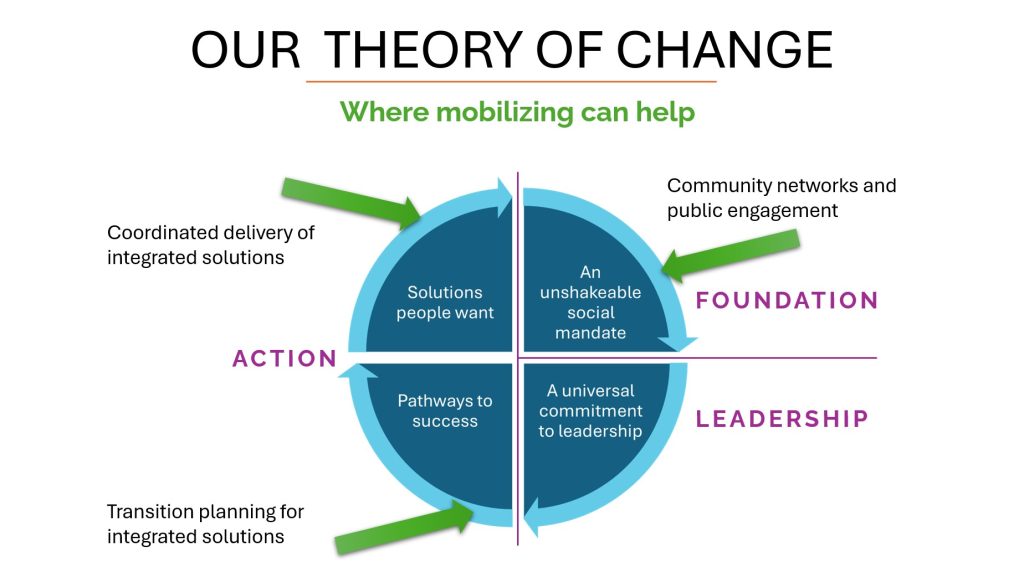
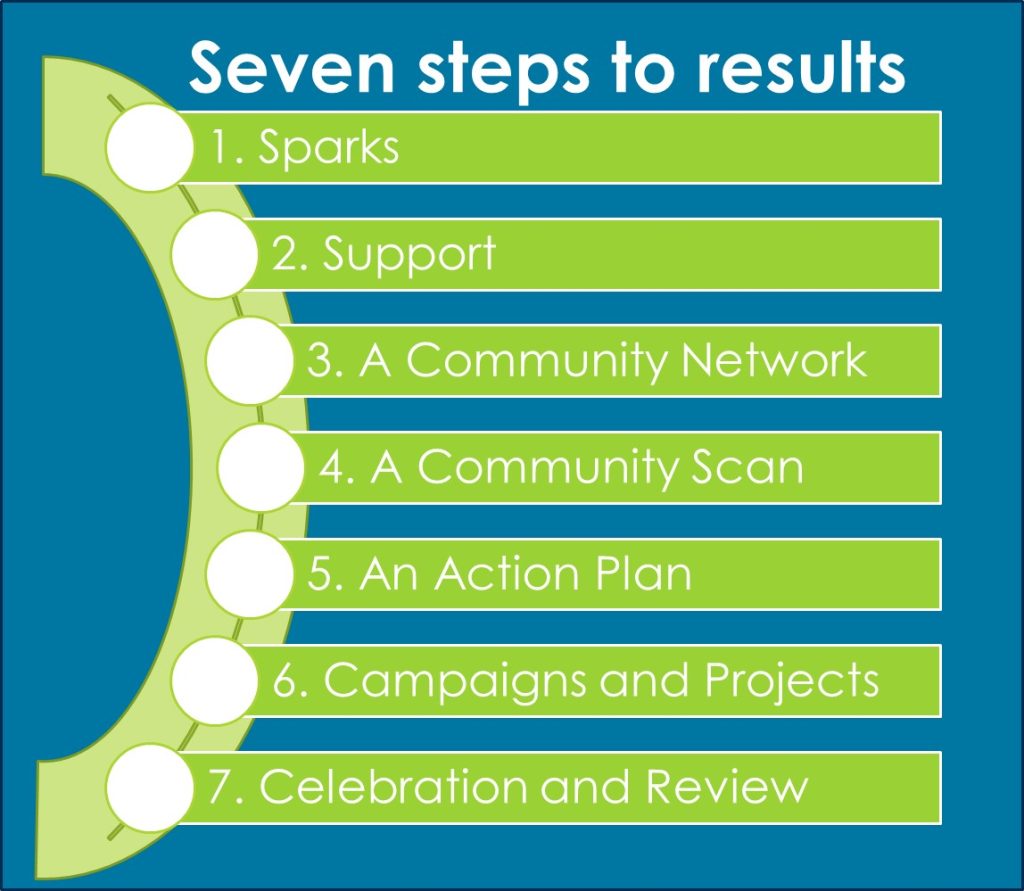
Mobilizing a movement looks at the formal and informal approaches to organizing around common objectives. At the simplest level, it is a process of finding allies, working together to plan for success, and collaborate on projects and plans to deliver results.

Our “big idea” is to distill community (or network) planning into a simple and low-cost process that can adapted for any situation. 

Our Big Idea.... Resilient Communities

Description

Community action is how we translate our collective passion, concerns, and resources into action.

This section contains resources to help understand and initiate a community action network and plan in your community.

Organization

No doubt about it, community action requires organizing. 

Done right, a good community plan will be 10% organizing and 90% action.  It will also draw upon, and reinforce the skills and resources within the community network.

Done right, the investment in organizing will reap benefits many times over in volunteer contributions and improved project funding.

Organic

Community action can also be 100% volunteer led. It all depends on how you define your community and who’s involved. The same elements of organizing apply, whether it is organic or organized.

Examples

Our guide is based on a Community Action Plan program produced in the early 1990s by the Conservation Council of Ontario with funding from Enviroment Canada (download PDF).

Seven Ontario communities took up the challenge, and the results were amazing:

  • Three of them (Elora, Port Hope, and Thunder Bay) used their community action plans to secure major project funding under a provincial Green Communities program to support community-led energy conservation efforts.
  • Green Communities Canada was created to develop environmental resources for community-based projects.
  • The Elora community action plan helped local groups secure supp0rt for the Elora Environmental Centre, which is now over 30 years old.
  • The City of Toronto community action network ran a “Toxic Free in ’93” campaign to promote alternatives to household hazards, including a Toxic Free pledge organized by the Toronto Environmental Alliance which led to a municipal ban on cosmetic pesticides in 2003, followed by a provincial ban in 2009. 
  • The City of Cambridge still supports community volunteerism through Cambridge City Green.

Community organizing helped make these things possible, however all of these successes were the result of dedicated individuals and organizations, often with the support of governments and other sponsors. 

You can find other examples of community plans, networks, and projects all around us, Some are part of formal programs and others are unique – a reflection of the creativity behind community-led initiatives.

Resources (in development)

  • A summary guide is in production.

About this site


This site contains ideas you can adapt and use in your work to support climate leadership and action. All ideas are free to use under a Creative Commons 0 licence. They are ideas, nothing more. Feel free to adapt and adopt, and to suggest other ideas for a stronger  climate movement.

Some poster designs have a hashtag to identify the designer. Feel free to contact them for more information on their work.


Find us: